

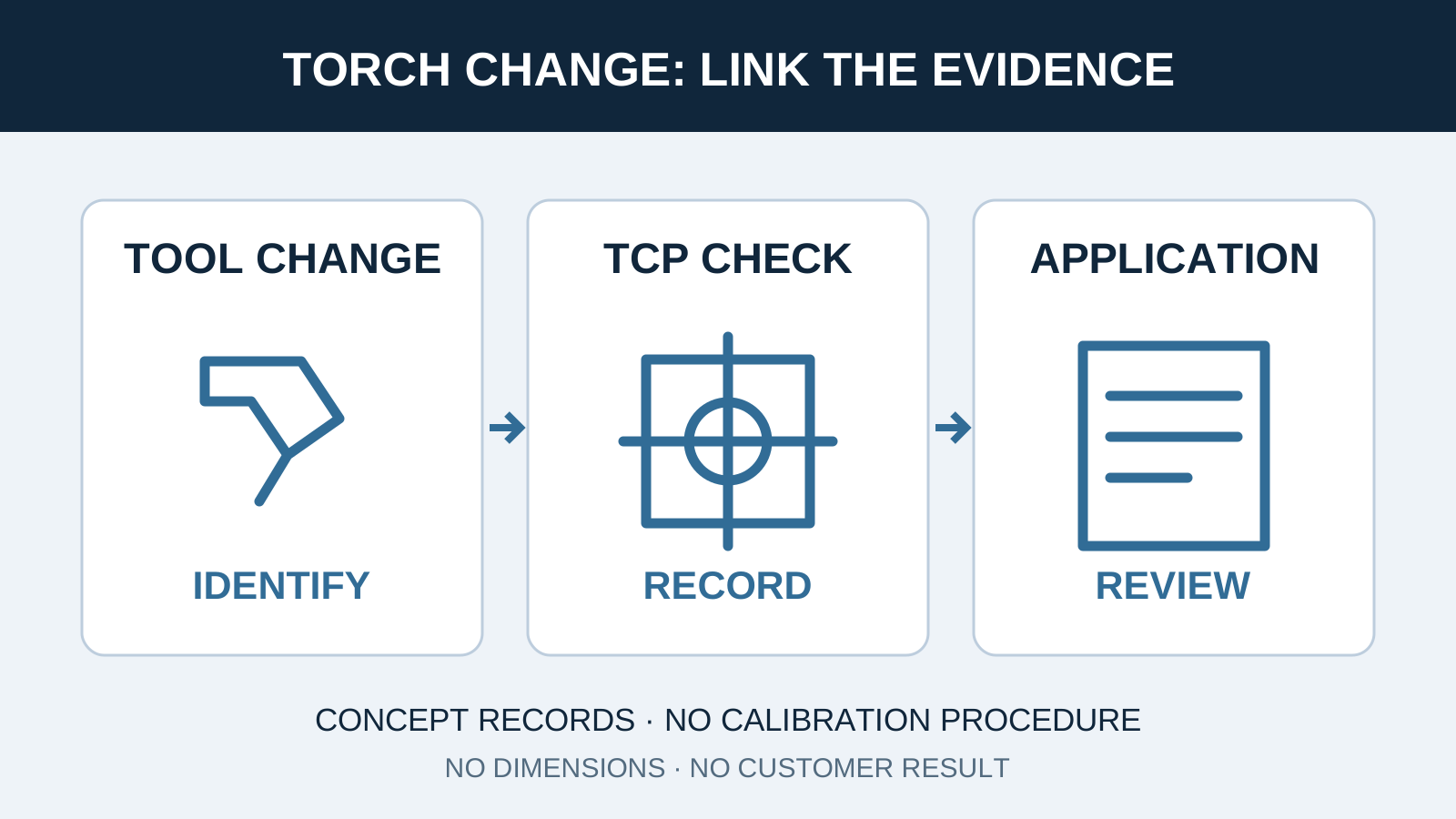
Original concept diagram: a torch-change record, a TCP check and application validation answer different questions. It is not a calibration procedure, dimensional drawing or customer result.
Agree on the check before reusing taught paths
Before reusing taught paths after a torch or neck change, agree how the installed tool will be checked against the program's tool setup. Do not assume that fitting a replacement makes the existing paths suitable for production. This CBOXTEC guide helps buyers specify the records and responsibilities; the actual check and any correction must follow the applicable equipment instructions.
A matching part number does not document the installed TCP
TCP means tool center point, the tool reference used in robot programming. ABICOR BINZEL warns that a replacement torch neck needs checking and draws attention to its angle and length. Manfred Seipp, Welding with a robot – the 5 most common mistakes; published 2021-01-29; accessed 2026-10-15.
A specific equipment example shows why the manual matters: the ABICOR BINZEL TCS Compact operating instructions, section 5.3, page EN-14; revision 2024-09-10; accessed 2026-10-15 call for calibration using the test tip after torch replacement or a collision. That instruction belongs to the described equipment; it does not establish a CBOXTEC calibration function or a universal method.
Robot repeatability, the installed tool reference and weld acceptance are separate matters. A TCP check alone does not inspect a weld, establish fixture condition or approve a restart after a collision.
Ask for three linked records
Keep the replacement, tool check and application result traceable to each other. The following are quotation questions, not a calibration or acceptance standard:
- Tool change: identify the removed and installed torch or neck, the relevant consumables and the program's tool-data revision. Record what actually changed rather than only writing “torch serviced”.
- TCP check: identify the applicable equipment procedure, check reference, recorded result and responsible person. If a correction is required, keep the correction and subsequent check linked; agree the acceptance criterion for the actual application.
- Application validation: identify the program revision, part and fixture used for the agreed verification, together with the first-piece inspection result and the person responsible for authorizing production use.
Maintenance, calibration and collision recovery require the equipment instructions and appropriately qualified personnel. This record list does not tell an operator to move the robot, straighten a neck, change tool coordinates or bypass a protective stop.
Put the responsibility in the quotation
Ask which checking equipment, software options, documentation and training are included, and who performs and reviews the work. Separate a manual check from an automatic measuring or updating function. Neither is included merely because the quotation says “TCP”.
For the wider trial scope, see the robot welding sample-trial guide.
Questions about torch changes
Must every path be taught again after a torch change?
This guide cannot decide that for a particular system. Have the responsible personnel assess the installed tool and check results under the applicable instructions before deciding whether tool-data correction or path changes are needed.
Is automatic TCP measurement included with a welding robot?
Do not assume so. Ask for the named hardware, controller/software compatibility, included function and verification evidence in the written scope.
Does a passed TCP check prove the next weld is acceptable?
No. It answers the defined tool-check question. Welding procedure, part location and the agreed inspection and acceptance criteria still apply.
Discuss torch-change verification with CBOXTEC using the torch identification, controller/software details and the proposed change-and-check record.